
How Long Does MRB HPC015S Retain Footfall Data When Wi-Fi Fails?
Unstable Wi-Fi signals are a common pain point for wireless infrared footfall counters, risking permanent loss of critical visitor statistics during network outages. MRB’s HPC015S WiFi footfall counter eliminates this risk with built-in local offline cache storage, capable of safely holding up to 720 footfall records via a circular overwrite buffer. Once wireless connectivity recovers, the device prioritizes syncing all cached offline data to the cloud server automatically, ensuring zero missing traffic records for retail chains, museums, supermarkets and other commercial venues. This article breaks down the HPC015S offline data storage logic, core hardware advantages, and real-world operational value for multi-site business managers.
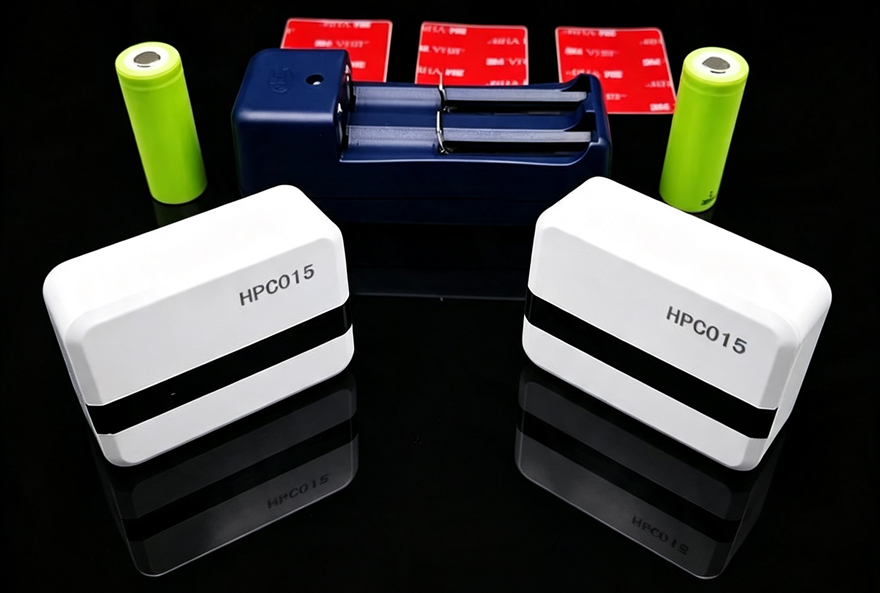
Table of Contents
1. Key Feature: 720 Circular Offline Cache Prevents Permanent Data Loss
2. All-Round Hardware & Software Strengths of MRB HPC015S Footfall Counter
3. Real-World Business Benefits of Robust Offline Data Storage
1. Key Feature: 720 Circular Offline Cache Prevents Permanent Data Loss
The MRB HPC015S infrared people counter is engineered with dedicated onboard memory exclusively for offline footfall log storage. Its fixed cache pool supports a maximum of 720 independent time-stamped entry and exit records, running on a first-in, first-out circular overwrite mechanism. When Wi-Fi disconnects and cloud upload malfunctions, the sensor continues capturing bidirectional visitor counts normally and writes every batch of statistical data to local memory without interruption. If the cache hits full capacity before network restoration, the oldest archived records will be overwritten sequentially to reserve space for new real-time footfall logs. As soon as the device reconnects to a stable Wi-Fi network, it triggers an automatic background sync task, transmitting all unsynchronized cached records to the designated cloud server ahead of new live traffic data, guaranteeing complete historical footfall reports without manual intervention.
2. All-Round Hardware & Software Strengths of MRB HPC015S Footfall Counter
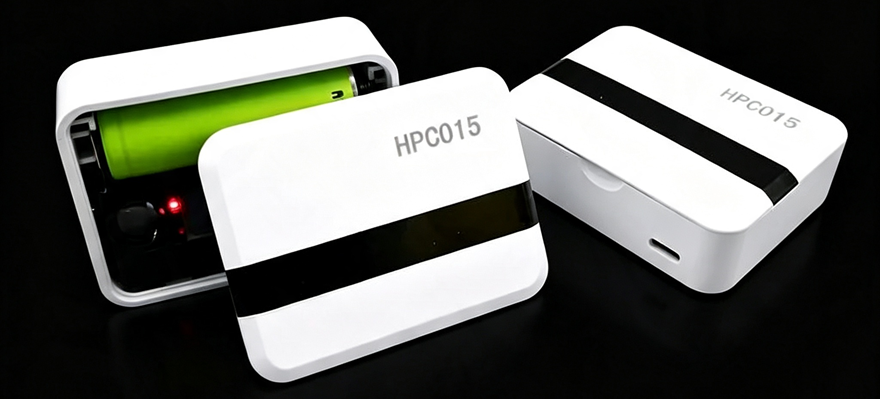
Beyond reliable offline data backup, the MRB HPC015S IR beams people counting system delivers a full suite of practical features tailored for small businesses and nationwide chain operators. This ultra-compact infrared people counter runs entirely on rechargeable lithium batteries, delivering up to 1.5 years of continuous operation with standard batteries, removing reliance on wall power outlets and complex wiring installation. It supports dual working modes: standalone offline mode for temporary pop-up stores, and Wi-Fi networking mode for centralized multi-location management. Users can configure device parameters, adjust detection speed, set business hours, and browse daily/monthly footfall summaries via any Android or iOS smartphone by connecting to the HPC015S built-in Wi-Fi AP hotspot and accessing its embedded web management page.
The infrared split-beam detection technology delivers stable counting performance even in dim indoor environments, with a flexible detection width ranging from 1 to 20 meters indoors and 1 to 16 meters outdoors. MRB also provides complete open communication protocols and accessible API interfaces, allowing technical teams to conduct seamless secondary development and data docking with existing POS, property management or marketing analysis platforms. OEM and ODM customization services are also available for brands requiring personalized casing, branding and feature adjustments.
3. Real-World Business Benefits of Robust Offline Data Storage
Many low-cost generic wireless footfall sensors lack sufficient local memory, discarding unsaved visitor data once Wi-Fi cuts out, which creates massive blind spots in business data analysis. For store managers relying on traffic data to judge peak customer hours, evaluate marketing campaign effectiveness or implement real-time occupancy control, lost records lead to flawed operational decisions.
The HPC015S WiFi digital door counter sensor’s 720-record offline cache solves this critical pain point perfectly. For venues with hourly data upload cycles, the cache can store nearly one month of complete footfall logs during sustained internet blackouts, giving site staff ample time to resolve router or signal interference issues without sacrificing historical statistics. Even for high-traffic supermarkets generating frequent counting batches, the circular buffer extends usable offline recording windows far longer than competing entry-level infrared counters on the market. This consistent data integrity directly translates to more accurate long-term customer behavior analysis, helping businesses cut unnecessary labor costs and maximize return on advertising investment.
4. Conclusion
Network instability remains an unavoidable challenge for wireless IoT footfall counting devices, but MRB’s HPC015S wireless visitor counter mitigates data loss risks through its robust 720-record circular offline cache system. The device continues capturing visitor data autonomously during Wi-Fi disconnections and automatically synchronizes all stored logs to the cloud once connectivity resumes, delivering unbroken, reliable traffic analytics for retail, cultural and hospitality spaces. Combined with long-lasting battery power, mobile-friendly web configuration, wide detection range and open API support, the HPC015S automatic customer counter stands out as a cost-effective, all-in-one passenger flow tracking solution for multi-location operators. For businesses seeking dependable footfall statistics without fear of lost offline data, the MRB HPC015S electronic people counter device is a high-performance, future-proof choice.

Author: Lily Updated: August 14th, 2026
Lily is a senior retail tech solutions specialist at MRB, with over 10 years of experience designing infrared footfall counting systems for global chain retailers, museums and scenic attractions. She regularly publishes industry guides covering people counter hardware selection, data analytics workflows and offline storage troubleshooting, helping business owners deploy efficient visitor tracking tools with minimal technical hurdles.
Post time: Aug-14-2026