
For public transit operators worldwide, reliable, accurate, and real-time passenger counting is no longer optional—it is essential for optimizing routes, controlling costs, improving safety, and enhancing rider experience. Among the many solutions available today, the MRB HPCM588 AI Passenger Counting Camera for Bus stands out as a purpose-built, high-performance system designed specifically for the demanding environment of city buses. Combining advanced deep learning algorithms, rugged industrial design, and flexible connectivity, it delivers consistent precision, strong environmental adaptability, and seamless data integration. This article explains why the MRB HPCM588 has become a top choice for modern intelligent public transportation fleets.
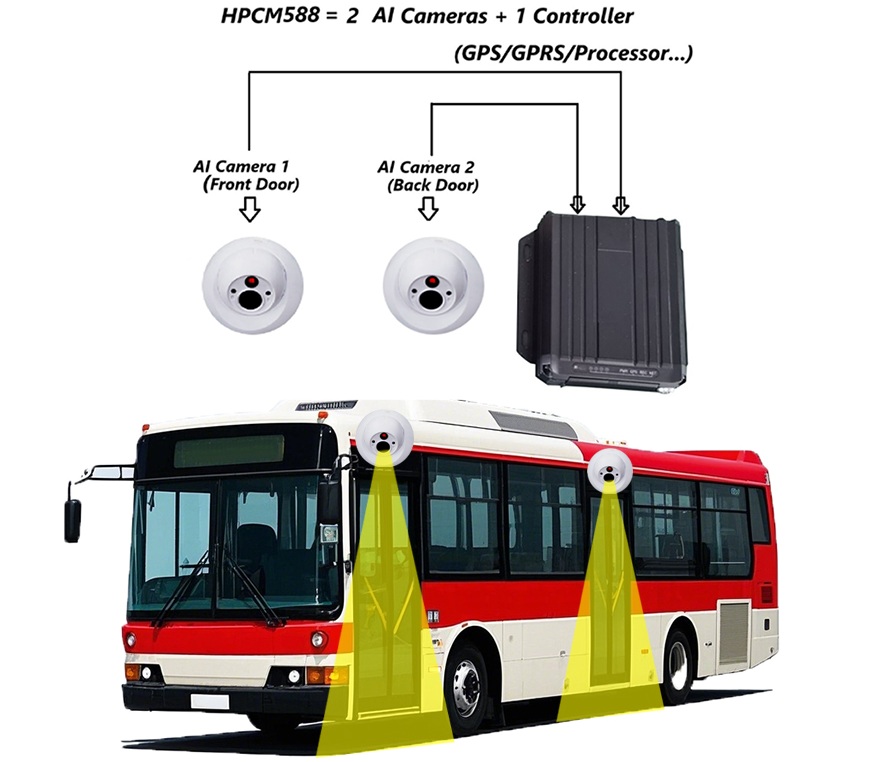
Table of Contents
1. Outstanding Counting Accuracy Even in Complex Boarding Scenarios
2. Strong Adaptability to Harsh Vehicle Environments
3. Flexible Connectivity and Cloud-Based Data Management
4. Scalable Design and Easy Deployment for Diverse Bus Types
5. Comprehensive Software Platform for Data-Driven Operations
1. Outstanding Counting Accuracy Even in Complex Boarding Scenarios
The most critical requirement for any passenger counter is reliability, and the MRB HPCM588 AI passenger counting system for public buses excels here. Powered by neural network deep learning and a self-developed image analysis engine, the system maintains high accuracy even when passengers walk side by side, cross paths, or block one another at bus doors. Unlike basic sensors that struggle with overlapping figures or varying appearances, this AI camera ignores differences in body shape, clothing, hats, or accessories, ensuring every person is counted correctly. Counting is triggered automatically by bus door status—activating when doors open and pausing when closed—eliminating false counts and improving temporal precision. This level of stability makes the HPCM588 automatic AI passenger counting system suitable for busy urban routes with heavy, unpredictable passenger flows.
2. Strong Adaptability to Harsh Vehicle Environments
Public transit vehicles operate under extreme conditions, and the MRB HPCM588 automatic AI passenger counter for bus is engineered to perform reliably year-round. The system features a custom image anti‑shake algorithm that maintains stable imaging despite vehicle vibration and movement. It supports a wide operating temperature range from -30℃ to +85℃ and functions effectively in high humidity without condensation issues. An integrated automatic light compensation module activates in low‑light or nighttime conditions, preserving the same high recognition rate as daytime without manual adjustment. Whether in bright sunshine, heavy rain, or dimly lit underground terminals, the AI camera delivers clear visuals and consistent counting performance.
3. Flexible Connectivity and Cloud-Based Data Management
Modern transit systems depend on real-time data, and the HPCM588 public transport automated passenger counter for buses simplifies fleet-wide monitoring and analysis. The integrated data box comes with built-in 4G LTE and GPS modules, enabling instant upload of passenger flow data to the cloud. It supports both local offline storage via a high-capacity SD card and remote OTA updates, reducing maintenance visits and ensuring the system stays up to date. The passenger counter device offers multiple standard interfaces including RS485, RS232, CAN 2.0, and Ethernet, allowing smooth integration with third-party dispatch, ticketing, and management platforms. Transit managers can remotely view live video, replay historical footage, and generate automated reports via the dedicated HPCPS platform, supporting smarter scheduling and resource allocation.
4. Scalable Design and Easy Deployment for Diverse Bus Types
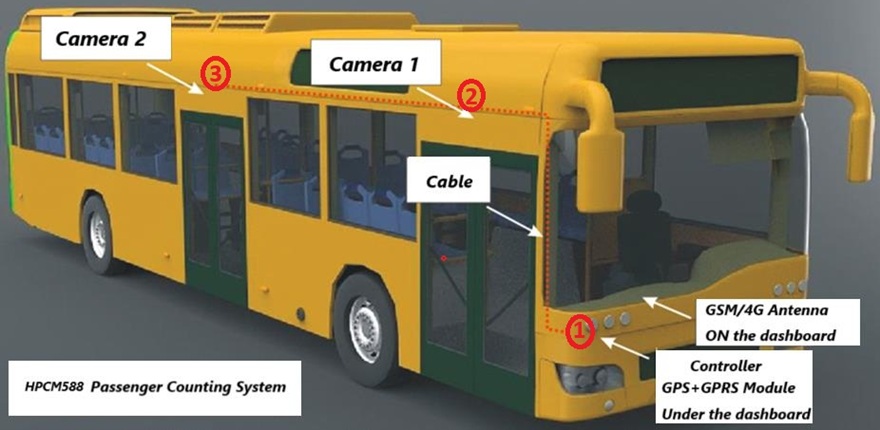
The MRB HPCM588 smart AI bus passenger counting system is highly modular and compatible with single-door, double-door, and multi‑door bus models. Cameras install quickly above doorways using standard connectors, with cables routed safely through existing vehicle ducts. The compact data box fits neatly in dashboard or control areas, simplifying retrofitting and new-vehicle installation alike. The passenger counter system supports personalized function customization and secondary development, letting operators add features such as OD passenger origin-destination analysis, peak-hour flow statistics, and customized reporting. This scalability allows small municipal fleets and large national transit agencies to adapt the solution to their unique operational needs.
5. Comprehensive Software Platform for Data-Driven Operations
Beyond counting, the HPCM588 high accuracy AI people counter for bus provides actionable intelligence through its HPCPS passenger statistics and management software. The platform supports multi-user access, multilingual interfaces (English, Spanish), and private server deployment for enhanced data security. It automatically generates door-by-door passenger records, time-period flow trends, and route-level OD analysis, helping planners identify overcrowded stops, balance vehicle loads, and adjust timetables. These insights reduce unnecessary mileage, cut fuel and labor costs, and improve overall service quality—turning raw passenger data into strategic operational value.
6. Conclusion
The MRB HPCM588 automatic AI passenger counting system for public transport combines industry-leading accuracy, rugged durability, flexible connectivity, and intelligent data management to solve the real-world challenges of public transit. From busy city centers to suburban routes, it delivers stable performance under harsh conditions while providing the reliable data operators need to optimize services, reduce expenses, and improve passenger satisfaction. For any fleet aiming to upgrade to intelligent, data-driven operations, the MRB HPCM588 AI camera bus passenger counting system represents a mature, cost-effective, and future-proof solution.

Author: Lily Updated: April 16th, 2026
Lily is a senior product specialist at MRB with extensive experience in intelligent transportation systems and AI-powered visual monitoring solutions. She focuses on developing and promoting reliable, user-centric technologies for public transit, helping fleet operators enhance efficiency, safety, and service quality through innovation.
Post time: Apr-16-2026