
For battery-powered electronic name badges, balancing reliable performance, real-time updates, and long battery life has long been a key engineering challenge. The combination of NFC wake-up and Bluetooth transmission creates an ultra-efficient power management architecture that drastically cuts unnecessary energy use, extends service life, and maintains stable connectivity. MRB’s HSN371 battery-powered electronic name badge fully integrates this optimized dual-mode design, making it one of the most power-efficient digital name tags on the market. By using NFC only for activation and Bluetooth for secure data transfer, the device stays in low-power sleep mode nearly all the time, ensuring years of maintenance-free use without frequent charging or battery swaps.
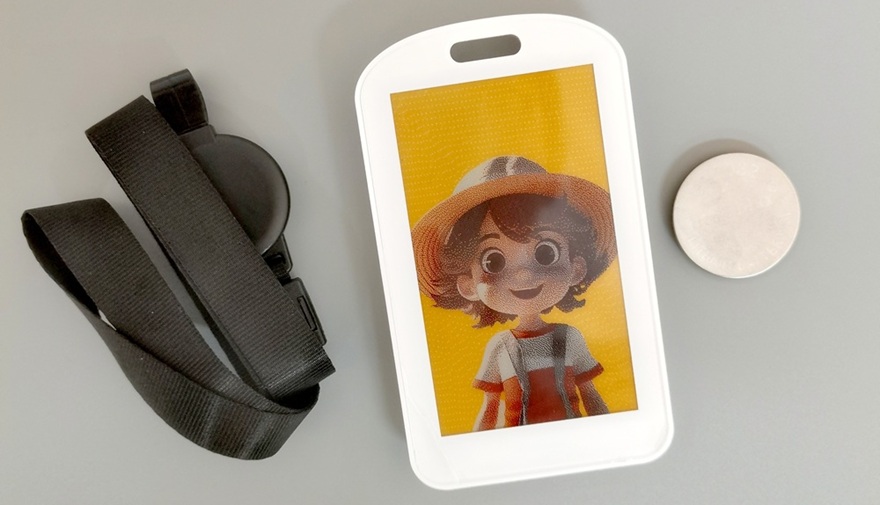
Table of Contents
1. NFC Wake-Up: Zero-Power Activation That Eliminates Standby Waste
2. Bluetooth Transmission: Low-Energy Data Sync for Efficient Content Updates
3. MRB HSN371 Electronic Name Badge: Optimized Hardware Design for Ultra-Long Battery Life
1. NFC Wake-Up: Zero-Power Activation That Eliminates Standby Waste
The core advantage of NFC wake-up is that it requires no power consumption from the digital name badge itself during idle periods. Unlike devices that rely on periodic beaconing, motion sensors, or continuous radio listening—all of which drain power quickly—the HSN371 E-paper Electronic Name Badge remains in a deep-sleep state until triggered by an external NFC field. This on-demand activation ensures the microcontroller and display circuits only turn on when needed, not at regular intervals. MRB’s HSN371 uses the 13.56 MHz NFC frequency compliant with ISO/IEC 14443-A, delivering fast, stable triggering without drawing power from the badge’s battery. This design removes nearly all standby power loss, the single biggest cause of short battery life in conventional wireless badges.
2. Bluetooth Transmission: Low-Energy Data Sync for Efficient Content Updates
Once woken by NFC, the HSN371 E-ink electronic name tag uses Bluetooth for fast, low-power data transmission to update names, titles, branding, and other information. Bluetooth low-energy architecture minimizes transmit power and shortens connection time, so the radio module is active only briefly during sync. Unlike always-on wireless links that waste power maintaining connections, the HSN371 wireless digital name badge uses Bluetooth just for payload delivery, then immediately returns to sleep. This burst-mode communication matches perfectly with NFC wake-up, forming a power-sparing workflow. Users can update content via a free mobile app or desktop software, with changes reflected quickly while keeping energy use to a minimum.
3. MRB HSN371 Electronic Name Badge: Optimized Hardware Design for Ultra-Long Battery Life
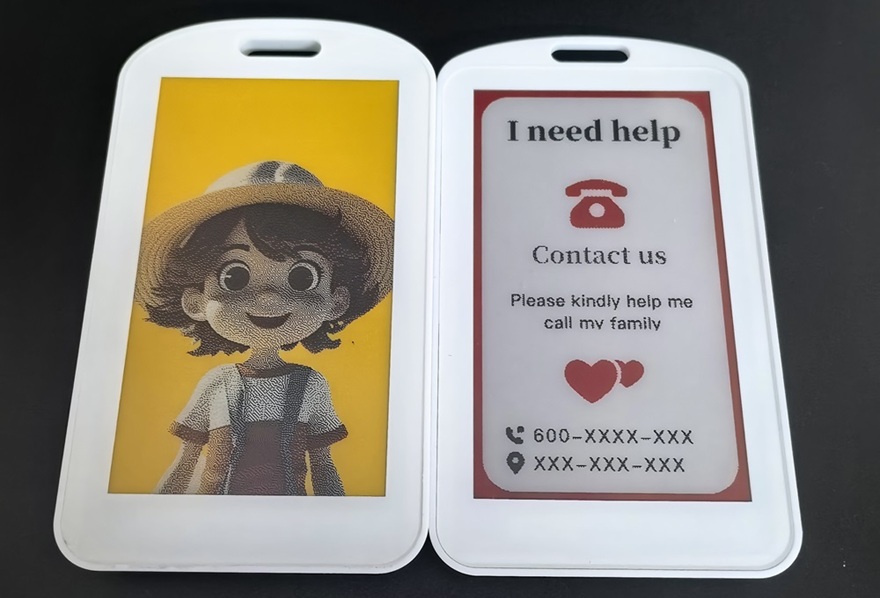
The MRB HSN371 battery-powered electronic work badge takes NFC–Bluetooth power efficiency further with purpose-built hardware. It uses a replaceable 3V CR3032 battery rated for up to one year of life, depending on update frequency. The 4-color (black, white, red, yellow) epaper-like display maintains content without power once updated, supporting the 178° wide viewing angle and 240×416 resolution. The compact 62.15×107.12×10 mm build and lightweight structure avoid unnecessary power draw from extra components. Every part of the HSN371 ESL work badge is engineered to preserve battery while supporting reusable, customizable, and professional digital name display for offices, conferences, and events.
4. Conclusion
NFC wake-up and Bluetooth transmission together solve the battery-life dilemma for electronic name badges by cutting idle power use and enabling efficient on-demand updates. MRB’s HSN371 Bluetooth NFC digital name tag turns this technology into a practical, high-performance product that offers long battery life, easy content management, strong security, and a crisp multi-color display. For businesses seeking reusable, maintenance-light digital identification, the HSN371 ESL digital name badge demonstrates how smart wireless design can deliver convenience, professionalism, and exceptional power efficiency in one compact device.

Author: Lily Updated: March 25th, 2026
Lily is a product specialist and technical writer at MRB, focusing on electronic shelf labels, digital name badges, and smart office hardware. She researches low-power design, wireless communication, and enterprise identification solutions to share practical insights on efficient and intelligent office equipment.
Post time: Mar-25-2026